

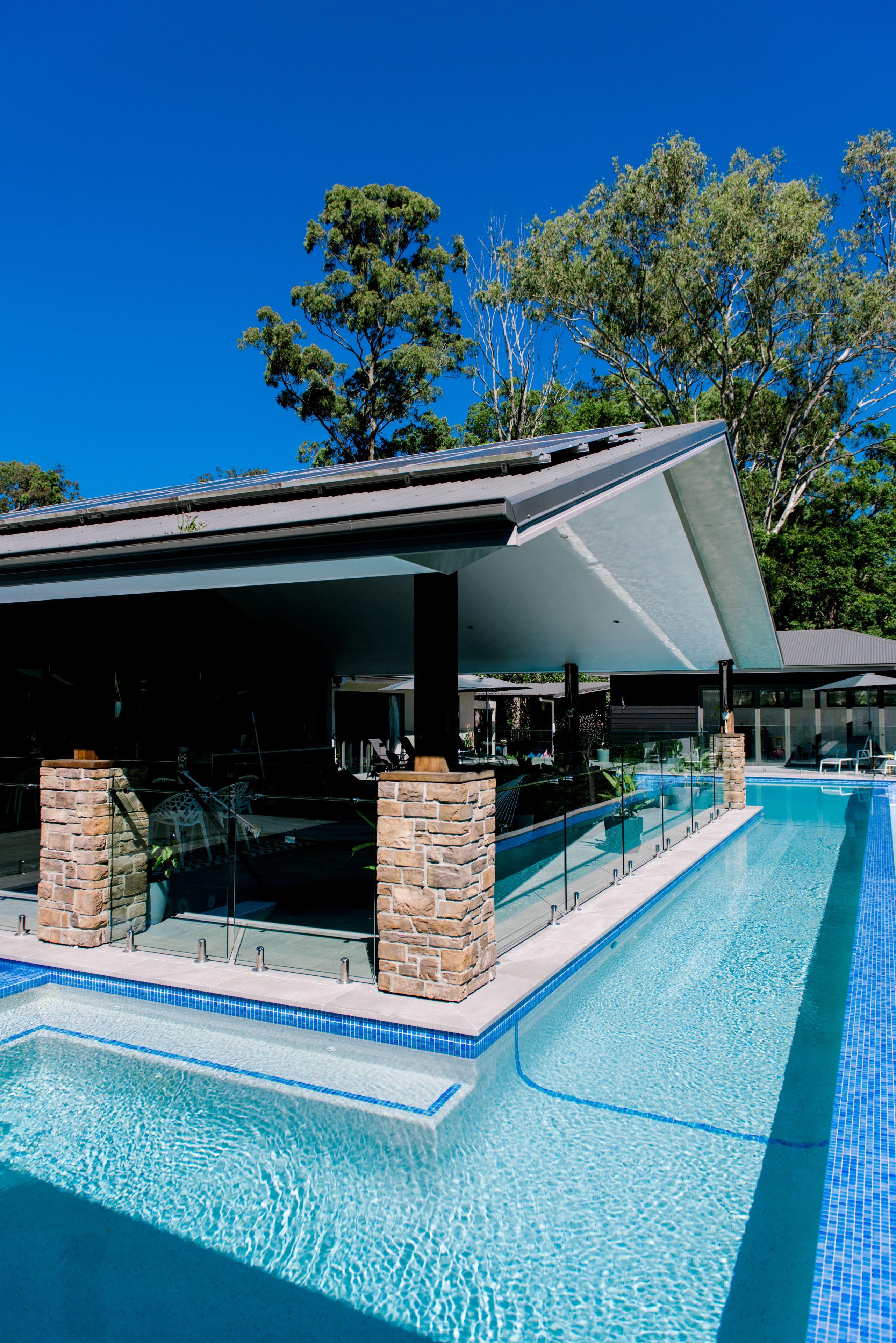
Light changes how a pool looks, feels, and functions after sunset. The right plan turns water into a glowing centerpiece while keeping every step and edge safe. Poor planning, however, causes glare, shadows, and wasted energy. This article presents lighting ideas for luxury pools that fit naturally into luxury residential pool construction, from underwater fixtures to garden accents.
Key Takeaways
- Lighting works best when designers plan it during the early design phase.
- Underwater LED fixtures provide even illumination and flexible color options.
- Fiber optic edges, niche lights, and steps lights add safety and style.
- Landscape and architectural lighting extend the glow beyond the water.
- Warm and cool color temperatures create very different moods.
- Smart controls allow scenes, timers, and energy savings from a single app.
- Proper wiring, low-voltage systems, and regular maintenance protect safety and performance.
Planning Lighting During the Design Stage
Lighting belongs on the drawings from day one. Designers decide fixture positions before the shell is built, because most underwater lights sit in wall niches or cast-in conduits. Adding them later means cutting into finished surfaces.
In addition, set clear goals. Do you want a soft evening glow, a party atmosphere, or both? Specifically, answers to these questions guide fixture type, power needs, and control systems.
Using Underwater LED Fixtures
LED lights dominate modern pools. They use far less power than older halogen bulbs, last for many years, and produce very little heat. Furthermore, most models offer both white and full-color options.
Spacing matters more than brightness. Place fixtures evenly along the walls to avoid hot spots and dark corners. For example, a long rectangular pool often needs lights on both sides, whereas a small plunge pool may need only one.
Highlighting Steps, Shelves, and Edges
Safety lighting guides swimmers in and out of the water. Small fixtures on steps, tanning shelves, and benches mark changes in depth. Moreover, they create attractive lines of light across the surface.
Fiber optic strips offer another approach. Not only do they outline a pool edge elegantly, but they also run cool and safe to touch. Consequently, owners often use them along infinity edges and spa seats.
Lighting Water Features and Waterfalls
Moving water catches light beautifully. A waterfall, spillway, or sheer descent sparkles when lit from below or behind. Therefore, designers embed fixtures inside the feature during construction.
Choose warm white for natural stone and cool white for glass or steel. In particular, a subtle, steady glow looks refined, while rapid color changes can feel distracting. Test the effect after dark before final installation.
Extending Light Into the Landscape
Pool lighting should not stop at the water line. Uplights on trees, path lights along walkways, and wall washers on garden structures all widen the visual space. In addition, they reduce the harsh contrast between bright water and dark surroundings.
Aim fixtures carefully. Glare in the eyes ruins a relaxing evening. Instead, shield bulbs and angle light toward surfaces. As a result, the entire terrace feels balanced and inviting.
Choosing Color Temperature and Mood
Color temperature shapes atmosphere. Warm tones around 2700 to 3000 Kelvin feel cozy and resort-like. Cool tones near 4000 Kelvin look crisp and contemporary. Meanwhile, colored light suits events but rarely suits everyday use.
Many owners combine both. They keep a warm white setting for quiet nights and switch to color for parties. Indeed, flexible fixtures let you change the mood in seconds.
Adding Smart Controls and Scenes
Modern control systems turn lighting into a one-touch experience. Using a phone app or wall panel, owners can set scenes for dining, swimming, or entertaining. Additionally, timers switch lights on at dusk and off at bedtime.
Integration also saves energy. Link the lights with pumps and heaters so the system works as one unit. Accordingly, automation reduces both effort and running costs.
Prioritizing Electrical Safety and Maintenance
Water and electricity demand strict standards. Licensed electricians must install low-voltage transformers, ground-fault protection, and sealed junction boxes. Moreover, they must follow local codes for bonding and clearances.
Maintain the system regularly. Check seals, clean lenses, and replace failing modules promptly. Nevertheless, never service wiring yourself. A qualified technician protects your safety and your warranty.
 Miracle